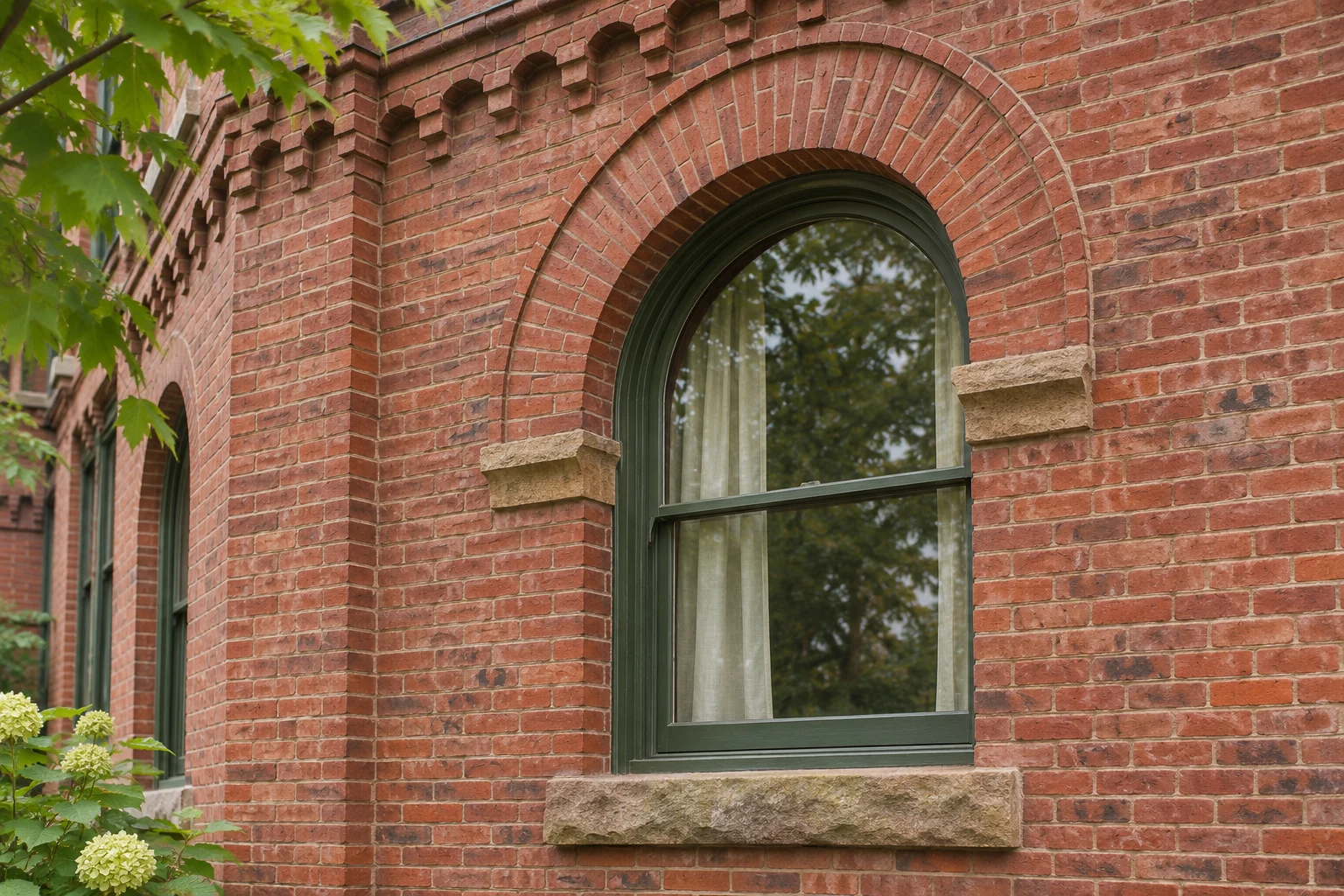
Historic masonry restoration.
A repair plan shaped by the building.
Older Rochester buildings carry their history in the brickwork: the size and color of individual units, the rhythm of the joints and the details around windows and entrances. Restoration should begin with those existing features, not a plan to make every surface look new. Valleystone offers historic masonry restoration alongside general masonry restoration and practical repairs for brick, mortar and block.
Tell us what you want to preserve and which conditions are causing concern. An older home, a commercial facade or a masonry addition can have several generations of repairs. Identifying those differences helps separate sound original work from areas that need attention. The scope may range from selected joint repairs to coordinated brick replacement and related water-entry repairs.
Match more than the mortar color.
Historic masonry needs compatible repair materials. Color alone is not enough: mortar strength, moisture behavior, aggregate and joint finish also matter. A hard, dense mortar is not automatically a better choice for softer older brick. Preserve sound masonry where possible and consider a sample panel before broad repointing. Removal methods should protect the edges of the existing units rather than widen or scar the joints.
For a proposed restoration, ask what evidence supports the mortar selection, whether testing or specialist input is needed, and how the finished sample will be reviewed. A building’s age does not establish one universal mix. See our guide to matching mortar on older brick and our repointing service for related planning questions.
For independent background, read the National Park Service’s Preservation Brief 2 on repointing historic masonry. Guidance informs a project-specific assessment; it does not replace it.
Document, assess, agree.
Build a picture of the property
Gather available construction dates, past repair records and photographs. Mark the areas where mortar is missing, brick faces are deteriorating or leaks have appeared. Include views of the whole elevation as well as close-ups.
Separate appearance from underlying condition
Discuss open joints, damaged units, previous patches and nearby roof, flashing or drainage details. A stained facade and a moving wall are different problems. Bulging, loose masonry or suspected structural movement may require an engineer’s review before repair decisions.
Set the preservation priorities
Identify details to retain, acceptable repair boundaries and how replacement materials will be compared with the existing work. Record the agreed sample, joint profile and finish expectations. Keep photographs and scope documents for future maintenance.
Confirm approvals and responsibilities
If the property is locally designated, in a historic district or subject to other preservation requirements, check with the relevant authority before exterior changes. Confirm who will obtain any required approvals and whether a preservation professional should help define the treatment. Requirements depend on the property and work proposed.
Rochester’s older housing and commercial buildings deserve attention to their individual construction and exposure. Discuss access, occupied spaces, adjoining properties and weather protection early so the proposed sequence is realistic. We do not assume every older property is designated or that every repair has the same approval process.
Restoration questions, answered.
Is restoration the same as replacing all the brick?
No. Start by identifying what can remain and what is damaged. The repair scope should explain why particular units or joints need work rather than treating the whole facade as a replacement project.
Can old brick be repointed with any modern mortar?
Mortar should be selected for the existing masonry, not simply because a bagged mix is readily available. Ask about compatibility and how the proposed material will be evaluated before approving broad repointing.
Do you guarantee an invisible match?
No exact match should be assumed before samples are reviewed. Weathering, original materials, previous repairs and availability can affect the result. Agree on an appropriate appearance and repair approach for the property.
What should I send about a historic property?
Include the address, building type, any known designation, photographs and your main concerns. Past specifications or repair records are useful if available. Photos help start the discussion but cannot establish concealed conditions.
Plan the next step.
Let’s define the next step.
Send the property location, a description of the damage, and both wide and close-up photos. Mention any recent changes or known leaks. A site visit may be needed to establish the full scope.
Request an estimate →