A wall with crumbling joints and chipped brick can look like one problem from the sidewalk. Up close, there may be two different repairs to plan. Repointing addresses the mortar between masonry units. Brick replacement addresses units that are damaged or unsuitable to remain. Getting that distinction into the estimate helps you understand what you are paying for and what the repair is intended to accomplish.
For a Rochester home or commercial building, start by documenting the affected area rather than deciding on a repair product. Wide photos show the wall’s context; close-ups show whether the damage follows the joints, passes through the brick, or involves both.
Follow the damage, not just the crack
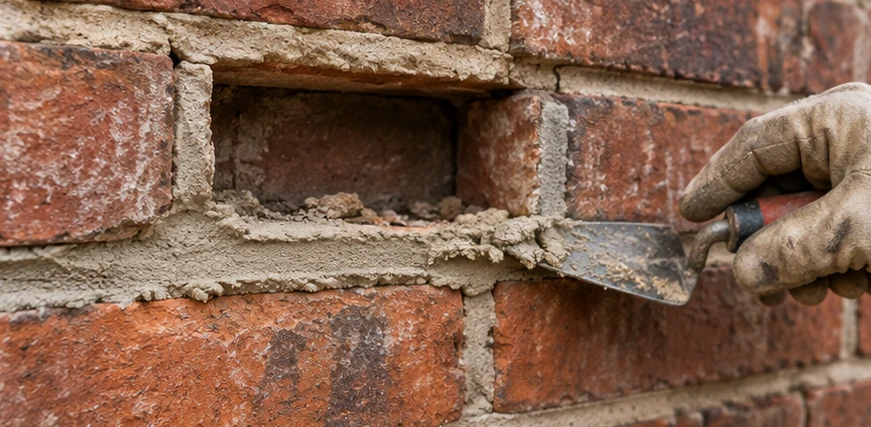
Open, recessed or crumbling mortar joints are reasons to discuss repointing. If the surrounding brick is sound and the wall is otherwise suitable to remain, renewing the affected joints may be an appropriate scope. Preparation matters: a thin layer of mortar smeared over a deteriorated joint is different from removing unsound material and properly renewing it.
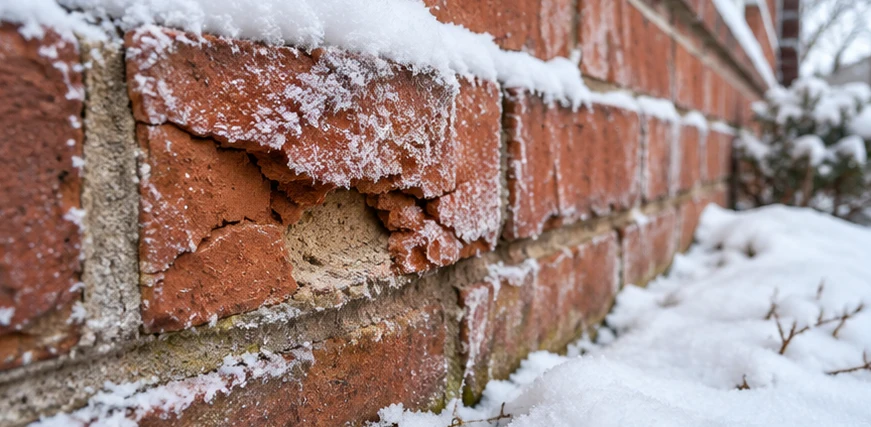
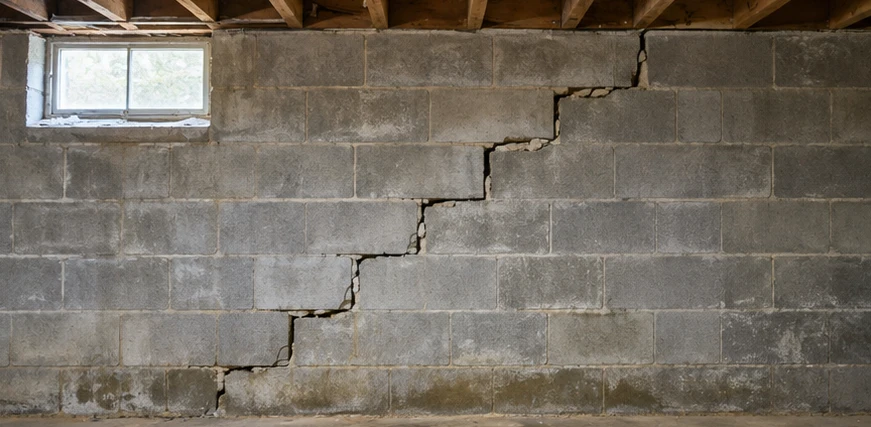
Look separately at the brick faces and edges. A brick that is splitting, losing its face or breaking apart may need replacement even if new mortar could make the joint look better. A crack through several units also deserves a review of the larger wall condition before it is treated as a collection of isolated patches.
Why some jobs need both services
It is common for a repair area to contain a mixture of sound units, deteriorated joints and damaged units. Replacing selected brick may disturb adjacent mortar, while a joint repair may reveal that a neighboring unit is in worse condition than it first appeared. The written scope should explain how those overlapping needs will be handled.
Ask whether the proposal identifies specific replacement areas, an agreed allowance, or a method for approving additional work if concealed damage is found. A clear process is more useful than a vague promise to “repair all bad masonry.” No photo can establish every concealed condition.
Check what made the area deteriorate
The most visible damage may not explain the whole problem. Water reaching a wall from a roof edge, a failing detail near an opening or persistent ground-level wetting can contribute to recurring deterioration. Rochester’s freezing weather makes the moisture exposure worth understanding before repairs are selected.
This does not mean every brick repair requires a major investigation. It means a repeatedly failing patch, a damp area or damage concentrated below one detail should prompt a question: is the scope addressing the condition that keeps affecting this location? Replacing damaged brick alone may not stop a leak originating elsewhere.
Appearance is part of the scope
Matching brick involves size and texture as well as color. Mortar color, aggregate and joint profile also influence how the area blends. New work can be noticeable against weathered masonry even when the material choice is reasonable.
Ask to discuss the intended appearance before work begins. Where a larger or highly visible area is involved, a representative sample may help establish expectations. Do not judge fresh mortar against fully cured, weathered joints as though their appearance must already be identical.
Questions to ask before approving the estimate
- Which areas are being repointed, and which brick will be replaced?
- What preparation is included for deteriorated joints?
- How will replacement brick and mortar be selected?
- Are nearby water-entry details included, excluded or recommended for separate review?
- How will unexpected damage be documented and approved?
- What access, protection, cleanup and finish work are included?
When routine repair may not be enough
Bulging walls, displaced masonry, falling material or cracks that are visibly changing need prompt assessment. Keep people clear of unstable areas. Repointing should not be assumed to correct structural movement, and appearance alone cannot establish that a wall is safe.
The useful next step is a defined masonry repair review: identify the affected units and joints, discuss the surrounding conditions, and establish whether additional professional evaluation is needed. That gives you a better basis for choosing a repair than comparing patch prices alone.
Have a repair in mind?
Send your property location, a description and clear photographs. A defined scope starts with the conditions at your building, not a generic repair prescription.
Discuss your project →General guidance only. Concealed conditions, structural questions and local approval requirements may need an on-site review or a qualified design professional.