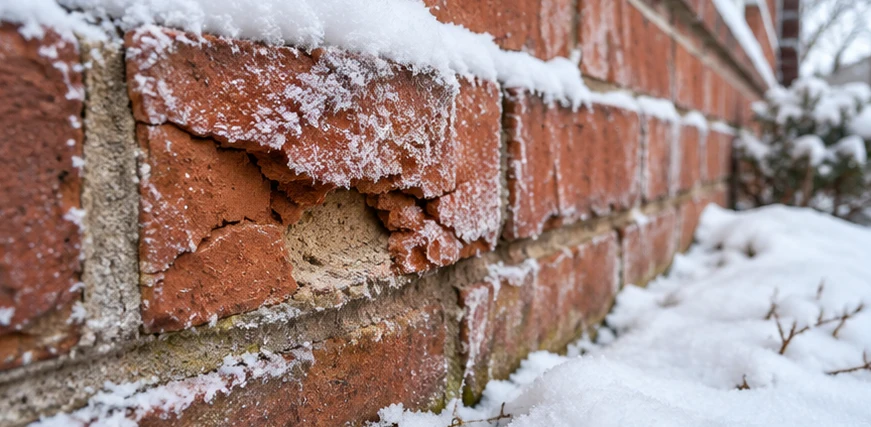
Finding pieces of brick on a walkway after winter can be unsettling. The missing material may have come from a face that is flaking or breaking away, often described as spalling. Freezing weather can contribute to that deterioration, but “winter damage” is not a complete diagnosis. The amount of water reaching the masonry, the material’s condition and nearby building details all matter.
A useful spring review focuses on where the damage appears and what surrounds it. That information can help a contractor distinguish a localized repair from a recurring exposure problem.
Water is an important part of the story
Brick and mortar can take in moisture. When sufficiently wet masonry freezes, the resulting stresses can contribute to deterioration. Repeated wetting and freezing can make vulnerable areas worse over time. Different masonry materials and conditions respond differently, so not every wet wall or winter crack has the same cause.
The practical takeaway is to look beyond the broken face. If one part of the wall stays wetter than the rest, there may be a reason. A repair plan should consider both the damaged material and any visible conditions that keep exposing it to water.
Look for patterns around the building
Observe from a safe location. You do not need to climb onto a roof or probe loose masonry to collect useful information. Pay attention to whether deterioration is concentrated:
- Below a roof edge, gutter or downspout.
- Around a window, door, sill or wall penetration.
- Near the ground where splashback or piled snow can affect the wall.
- Below the top of a wall or another horizontal masonry surface.
- In the same place as a previous repair.
Those patterns are clues, not proof. Water can travel before it becomes visible. A stain beneath a window does not, by itself, identify the exact entry point or show what is happening inside the assembly.
Keep a simple record before cleaning up
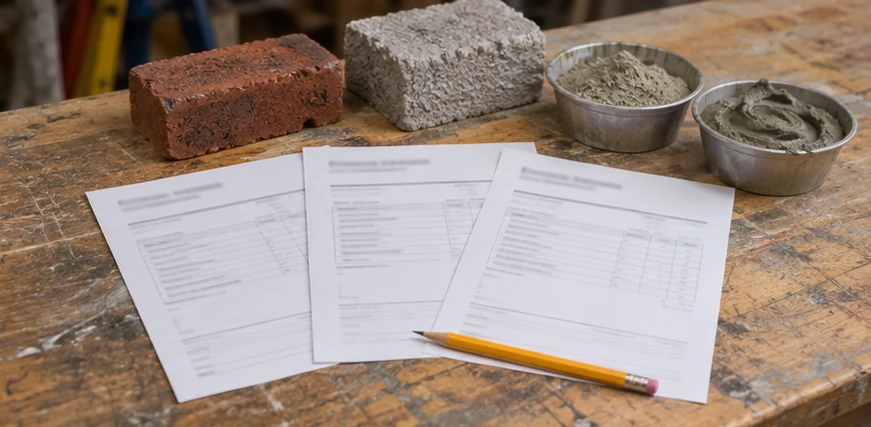
Take a wide photo of the elevation and closer photos of the affected areas. Note when you first noticed the damage and whether it changes after rain, thawing snow or a cold spell. Include previous repair dates if you know them. Save that information even if you do not arrange work immediately.
If material is loose overhead or continuing to fall, keep people away and arrange prompt assessment. Do not pull on loose brick faces or stand beneath unstable masonry to take a better picture.
What repair might involve
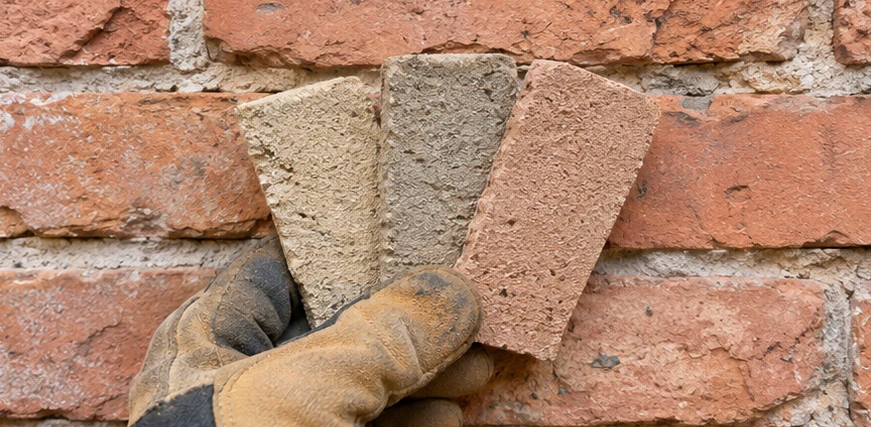
Deteriorated brick units may require targeted brick replacement. Failed mortar joints may need repointing. Some areas need both. The extent should be established by examining the wall rather than assuming every unit on the elevation must be replaced.
Related details may also need attention. A gutter problem, flashing concern or exposed wall top can fall outside a basic masonry estimate. Clarify who will evaluate and address those items. Otherwise, an owner may assume a repair includes correcting water entry when the quoted scope covers only the visible masonry.
Why coating the wall is not an automatic answer
It is tempting to look for a product that will “waterproof the brick.” A coating or sealer does not replace damaged units, restore failed joints or correct every entry path. Its suitability depends on the masonry, existing treatments and moisture conditions.
Ask what a proposed treatment is intended to accomplish, why it is compatible with the wall and what repairs must happen first. Avoid treating an unexplained moisture problem as a paint-selection exercise. A product that works on one wall is not automatically the right choice for another.
A spring check that helps the next winter
Arrange ordinary maintenance of gutters and downspouts through an appropriate provider, keep observations of drainage problems, and note areas that remain wet. Do not alter grading, drainage outlets or wall details without understanding their purpose and any applicable requirements.
For the masonry itself, request a scope that separates damaged units, deteriorated joints and related recommendations. A repair assessment grounded in the pattern of deterioration is more useful than simply covering the spot that lost material this winter.
Have a repair in mind?
Send your property location, a description and clear photographs. A defined scope starts with the conditions at your building, not a generic repair prescription.
Discuss your project →General guidance only. Concealed conditions, structural questions and local approval requirements may need an on-site review or a qualified design professional.