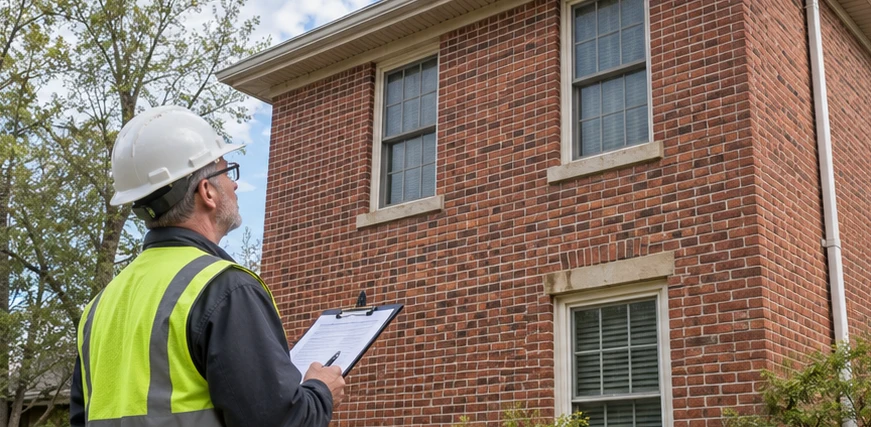
A short, careful look around a building can help you notice masonry changes before they disappear into the background. You do not need to diagnose the cause or decide on a repair yourself. The goal is to document what you can safely see and provide useful information when you request an assessment.
This checklist is intended for ground-level observation of Rochester homes and commercial properties. It is not a structural inspection or a reason to climb, probe loose material or enter an unsafe area. If masonry appears unstable or is falling, keep people clear and arrange appropriate help.
Start with a wide view
Walk around accessible areas and look at each wall as a whole. Note where damage appears relative to windows, doors, rooflines, corners, ground level and drainage features. A close-up can show a crack clearly while hiding the context needed to understand it.
Photograph the full elevation first, then take closer images from a safe position. Use the same viewpoints on later checks so changes are easier to compare. Record when you noticed the condition and any recent work or unusual weather.
Check the mortar joints
- Are joints visibly open, recessed or missing in localized areas?
- Do cracks follow the joints or pass through the masonry units?
- Are there patches that look different from surrounding work?
- Has a previously repaired area opened again?
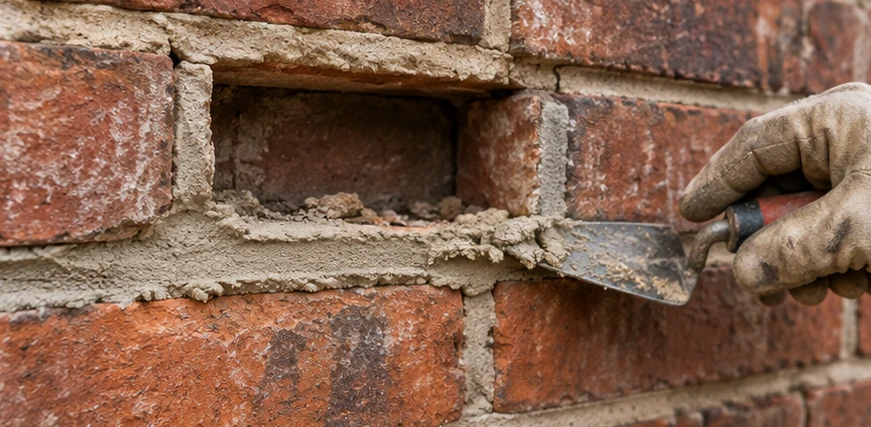
Do not scrape out material to test it. Visible deterioration may be enough to justify a closer review. Repointing may be appropriate for failed joints, but the condition of the surrounding units and any signs of movement also matter.
Look at the brick and block faces
Note cracked units, missing pieces, flaking faces or loose-looking masonry. Record whether the condition is concentrated near grade, below a sill or in another repeating pattern. A deteriorated brick face and an open mortar joint are different repair needs, even when they occur together.
For block walls, note displaced units, bowing or changing cracks from a safe distance. Those conditions may require structural evaluation rather than routine patching. A coat of parging can change the appearance of a wall without establishing that it is sound.
Look around openings and transitions
Windows, doors, roof intersections and changes in materials are useful places to observe. Note visible gaps, staining, cracked finishes or displaced masonry around them. Avoid assuming that the nearest crack is the source of a leak.
If water has appeared inside, photograph that location too and explain its relationship to the exterior. The timing of the leak can be as useful as the stain itself: mention wind-driven rain, snowmelt or prolonged wet weather if you noticed a pattern.
Include stucco and EIFS without probing them
On rendered or textured exteriors, look for cracks, loose areas, bulging and recurring stains. Photograph the affected area and adjacent details. Do not cut or puncture the finish to identify the system.
Stucco and EIFS may look similar, but the layers and repair approach can differ. Building records and past specifications are helpful if you have them. Photos alone cannot establish the condition of concealed material.
Separate routine planning from prompt concerns
Widespread weathering may be a maintenance-planning issue. Falling pieces, visible instability, a leaning section or a rapidly changing condition deserve prompt assessment and precautions to keep people away. Do not wait for a convenient project date if an area appears unsafe.
A crack’s width alone does not establish whether it is harmless. Its location, history and the behavior of the surrounding wall are important. Avoid relying on a single online rule to decide that a wall is safe.
Turn your observations into a useful repair request
Send the property location, wide and close-up photographs, a short description of the change and any known leak history. Include previous repair records, access restrictions and whether the area is occupied during the day.
Ask for a scope that identifies the affected areas and distinguishes visible repair work from conditions that need further investigation. A ground-level review is a useful starting point, not a substitute for the assessment needed to select the repair.
Explore masonry repair, brick repair and block repair to understand the different work your observations may lead to.
Have a repair in mind?
Send your property location, a description and clear photographs. A defined scope starts with the conditions at your building, not a generic repair prescription.
Discuss your project →General guidance only. Concealed conditions, structural questions and local approval requirements may need an on-site review or a qualified design professional.