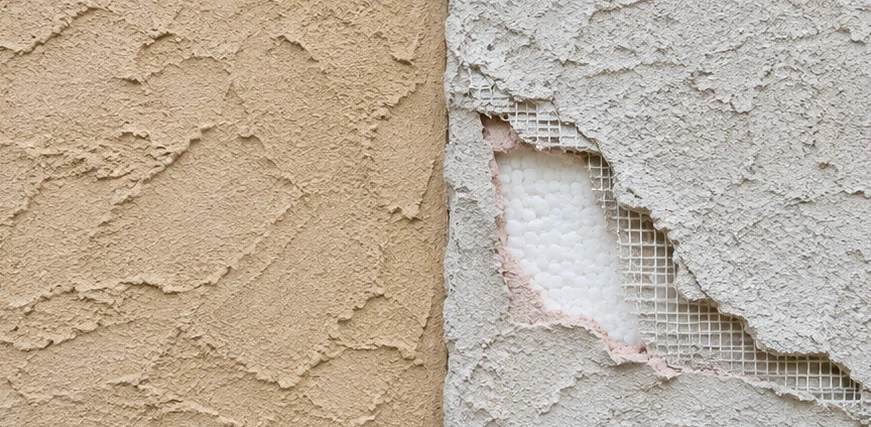
Two walls can look nearly identical from the sidewalk and require very different repairs. That is particularly important with stucco and EIFS, two exterior finishes found on homes and commercial buildings around Rochester. Both can have a textured, painted-looking surface, but the layers behind that surface may differ considerably.
Before asking someone to patch a crack, establish what kind of wall you have. That information helps determine which materials belong in the repair, how much of the affected area needs attention, and whether the visible damage is only part of the problem.
What is behind the finish?
Traditional cement-based stucco is a plaster finish applied as part of an exterior wall assembly. Depending on the construction, it may be applied over masonry or over lath and other supporting layers. The visible texture is only one part of that assembly.
EIFS stands for Exterior Insulation and Finish System. It generally includes exterior insulation board, a reinforced basecoat and a finish coat. Systems vary, including how they handle moisture. Knowing that a building has EIFS is useful, but original specifications or manufacturer information can make a repair plan more precise.
Do not identify either system by tapping, pressing or cutting into it yourself. A surface impression is not a reliable substitute for records and an appropriate review. Building plans, previous repair documents and original product information are helpful starting points.
The same mark can involve different layers
A narrow crack may be limited to the finish, or it may reflect movement or a condition below it. An impact can damage an EIFS finish, its reinforced basecoat and the insulation beneath it. Loose stucco may require removal of unsound material before a suitable repair can be made.
For that reason, an estimate that simply says “patch exterior” leaves important questions unanswered. Ask which layers are affected, what preparation is included, and what happens if removal exposes damage that was not visible initially.
Look closely at recurring trouble spots
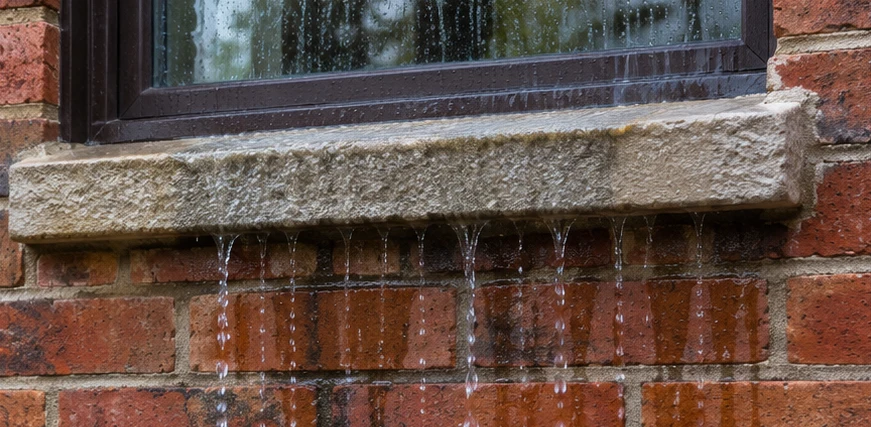
Problems around windows, doors, roof intersections, penetrations and the bottom of a wall deserve particular attention. Those locations involve transitions between materials. Water entering at a detail may show up some distance away, so the stain or crack you can see is not necessarily the entry point.
Rochester weather adds repeated wetting, freezing and drying to the equation. A surface patch may improve appearance without resolving an ongoing exposure problem. Where concealed moisture damage is suspected, further investigation may be needed before the wall is closed again.
What a useful repair scope should explain
- The existing system, to the extent it has been identified.
- The visible areas included and the limits of the repair.
- Preparation and removal of unsound material.
- The layers being repaired and the basis for material compatibility.
- Any related joints or exterior details included in the work.
- Finish expectations and how additional discoveries will be handled.
These points help distinguish a small finish repair from work that affects a larger portion of the assembly. They also make competing proposals easier to compare.
Be realistic about matching
Texture, color, weathering and light all affect whether a patch stands out. A finish that looks close in a sample may read differently across a large wall. Ask whether the proposal covers a localized patch or a wider finish area, and discuss appearance before work begins.
Repainting the wall first can complicate the sequence if areas later need removal. Understand the repair needs and coating compatibility before choosing a cosmetic treatment.
What to send before an assessment
Photograph the full elevation, the damaged area and nearby windows, rooflines or penetrations. Include previous repairs, any known leaks and when you first noticed the change. For a commercial property, add access restrictions and any available exterior-system specifications.
Explore stucco repair and EIFS repair as separate services. The next step is to define the work for the wall you actually have, rather than select a patching material from its appearance alone.
Have a repair in mind?
Send your property location, a description and clear photographs. A defined scope starts with the conditions at your building, not a generic repair prescription.
Discuss your project →General guidance only. Concealed conditions, structural questions and local approval requirements may need an on-site review or a qualified design professional.